

“The smartphone is the modern-day hypodermic needle, delivering digital dopamine 24/7.” — Dr. Anna Lembke, professor of addiction medicine at the Stanford School of Medicine and author of Dopamine Nation
An essential starting point: dopamine is commonly presented as the hormone of pleasure. That is inaccurate on two counts. First, it is a neurotransmitter. Second, it should be understood above all as the neurotransmitter of reward. And for there to be a reward, there must be a goal, an effort, and then the pleasure of the reward earned.
Once you see this, the picture becomes clear: unlimited, round-the-clock access to dopamine hits — through social media scrolling (a business model built on selling advertising by capturing attention on a screen) — carries several heavy consequences:
- The loss of the sense of effort: the brain gets used to obtaining its reward without producing any effort.
- A shrinking attention span: the brain is conditioned to jump quickly to a new stimulus to obtain its reward.
- Procrastination.
- Heightened anxiety: you fall short of your own goals while watching feeds full of trajectories that seem to succeed on every front.
For an executive, these states are the exact opposite of the exemplary posture leadership requires. Fragmented attention, a declining tolerance for effort and a background of anxiety directly degrade the quality of decision-making and your presence in Executive Committee meetings.
Here, from the standpoint of executive coaching, are the points in Dopamine Nation that strike me as decisive:
- The role of dopamine in the pleasure–pain balance.
- The physiological levers to activate to restore your dopamine levels and sustain your capacity to lead.
The role of dopamine in the pleasure–pain balance
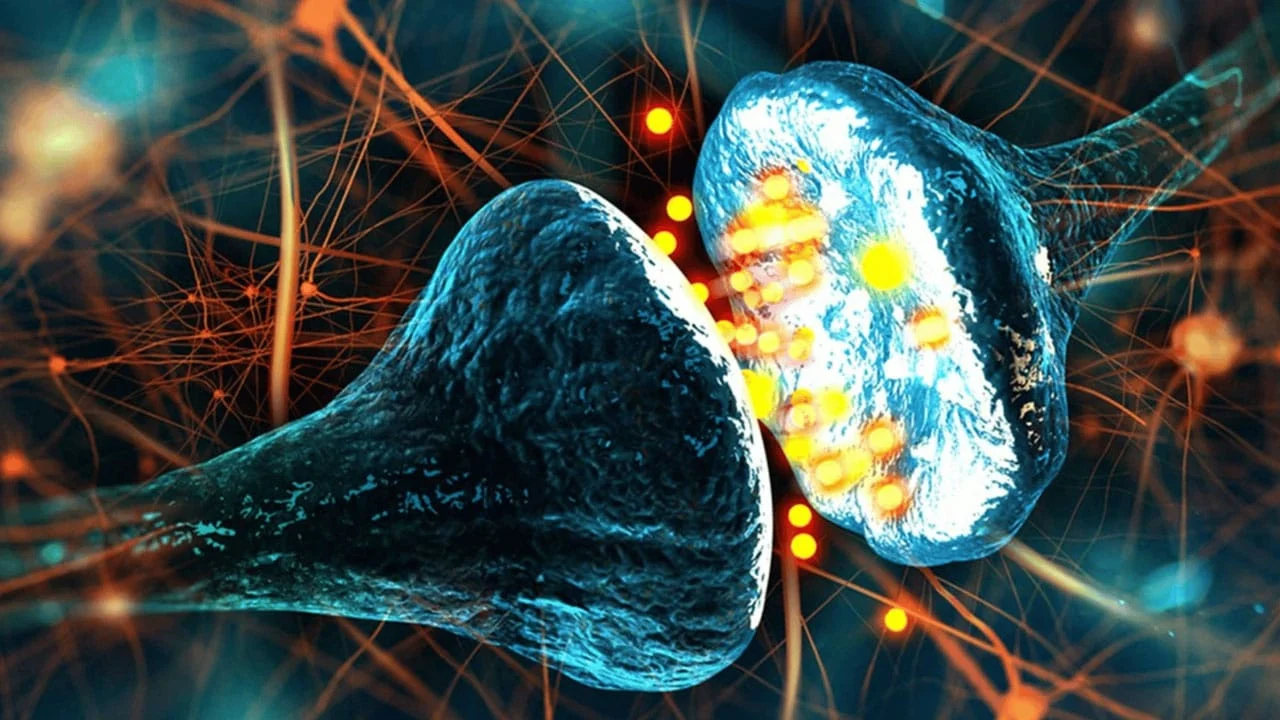
Dopamine is a molecule produced in the brain. It is a neurotransmitter, and it is essential to the experience of pleasure, reward and motivation. Actions that bring pleasure release dopamine into the brain’s reward circuit, a very specific neural pathway. The more dopamine a behavior releases, the more addictive that behavior can become.
Another finding from neuroscience is particularly illuminating: pleasure and pain are located in the same region of the brain. The same areas process both, and they work like the opposite ends of two forces that must find an equilibrium, the way a seesaw balances. That equilibrium represents the way we process our relationship to pleasure and to pain.
When we experience pleasure, we get a small release of dopamine in the reward circuit and the balance tips toward pleasure. When we experience something painful, like placing a finger on a hot stove, the balance tips toward pain.
But one of the universal rules is equilibrium. And our pleasure/pain balance refuses to stay tilted to either side for very long. As a consequence, the brain works to restore what is called homeostasis — that is, the return to equilibrium after an excess in either direction. This has far-reaching implications for our addictive behaviors and the way we handle stress.
In concrete terms, the primitive, reptilian wiring of our brain is not built for our modern world of abundance. The brain must constantly re-establish homeostasis — equilibrium.
Why resistance fails
When I do something that brings me pleasure, like eating a square of chocolate or watching stories on Instagram, it releases dopamine. In the reward pathway, my balance tips toward pleasure and I feel good. But immediately afterwards, the brain adapts to that surge by down-regulating my own production and transmission of dopamine.
The brain’s adaptive machinery then presses down on the “pain” side to bring back equilibrium. This is the mechanism behind “I’m not hungry anymore, but I have to take another square of chocolate” (the same pattern applies to pizza or fries). The balance does not readjust instantly: that interval is precisely when I need to be able to resist the next square. And the more I give in, the less I am chemically able to resist a pleasure within immediate reach.
If I wait long enough, the urge passes and equilibrium (homeostasis) is restored. But if I give in to the pull — which becomes automatic in an economy of abundance — then I stack up more and more pressure on the pain side. I enter a dopamine-deficit state: a brain in addiction.
From then on, I need that pizza (even though I am no longer hungry), I need to watch one more episode (even though it is already 2 a.m.) — not to feel good, but simply to get back to baseline. And if I do not give in, I experience the withdrawal symptoms of any addictive substance: anxiety, irritability, insomnia, thoughts convincing me that I must get my fix, sometimes even a depressive state. This is what is known as craving. For an executive, this mechanism plays out every evening between the phone and sleep, and every day at the cost of an attention span already worn thin.
The physiological levers that restore your dopamine levels and sustain your leadership
Hormesis comes from a Greek term meaning “to set in motion.” One simple reality has to sink in: we are an ecosystem. A problem of the mind cannot be solved by the mind alone. Einstein put it plainly: you cannot solve a problem with the same mechanics that created it.
This is one of the reasons why an approach confined to the mental register quickly reaches its limits. You do not build your capacity to lead through intellectual gymnastics alone. It takes physiological stimulation.
Let us take a single example today (there are others, depending on your profile): cold.
By deliberately exposing ourselves to stimuli perceived as painful, of light to moderate intensity — like a cold shower — we act in the body’s favor. Why?
Because the body detects pain, and the brain responds by increasing, by intensifying the production of the neurotransmitters and hormones that make us feel good.
It is a powerful mechanism: instead of consuming external sources (medication, stimulants), we produce them ourselves. Stepping under ice-cold water amounts to triggering a highly effective internal pharmacy. Studies show that immersion in an ice bath for one hour gradually raises dopamine levels in the brain — and, above all, that those levels remain elevated for several hours after getting out of the water.
Where the mechanism becomes genuinely interesting is that there is a way to obtain our dopamine naturally, by paying for it in advance with an action the brain perceives as painful. Intermittent fasting is another example.
And since we live in a society growing ever more fragile mentally (abundance of supply and consumption, the pursuit of comfort at any cost), the threshold of what we perceive as “pain” keeps dropping.
Managing your dopamine levels is a source of physical and mental balance. An executive’s performance depends on it directly. Leadership and dopamine work together.