

For an executive, mindset is not a personal-development extra: it determines your ability to decide under pressure. The beliefs running in the background weigh on every trade-off, every conversation, every read of a situation. Neurohacking provides the levers to reprogram those automatisms and decide with clarity when tension rises. This article is part of the executive's mental strength — the ability to decide under pressure.
Mindset is not a matter of intelligence. It is a decision: stay locked inside your certainties, or operate with a growth mindset.
You know the executives who find a way through no matter how hard things get. The market turns, a key member of the Executive Committee leaves, the board raises its demands: they hold course and eventually produce a decision. It is not a matter of IQ. It is a matter of mindset.
Every behavior, whatever it is, connects back to our beliefs. They come from our upbringing, the environment we grew up in, the experiences that shaped us, and a need waiting to be met. For an executive as for anyone else, this reference system operates in the background of every trade-off.
Changing a behavior means changing your beliefs and revisiting your needs. Beliefs are the very substance of our behaviors.
Limiting beliefs are the ones that keep us from clearing certain thresholds, the ones that block growth. Over the course of a mandate, they show up as postponed conversations, avoided decisions, and blind spots in how a situation gets read.
These are the beliefs to dismantle in order to anchor new habits — chosen and decided. This is precisely where neurohacking serves leadership.
What is neurohacking?
Neurohacking combines the latest neuroscience research with practical techniques to optimize how the brain works. For an executive, this approach makes it possible:
To install new habits, because I am not what I know, I am what I do.
To improve the quality of focus and memory: I learn to stop negotiating with my brain.
To learn to regulate emotions by understanding their origin and their cycles, because an emotion sits at the center of a biological cycle that must be understood and controlled.
Neurohacking has become a powerful lever in executive coaching: an effective method for clearing new thresholds, in a leadership transition as much as in the daily exercise of the mandate.
How neurohacking strengthens your leadership
Applied to leadership, neurohacking techniques focus on mindset and habits. Here is how:
- Build mental resilience: stay focused, even under strain, to observe reality objectively and stop ruminating on a past decision or a market signal.
- Improve decision-making: increase your capacity to decide objectively, despite pressure from the board, the calendar, and stakeholders.
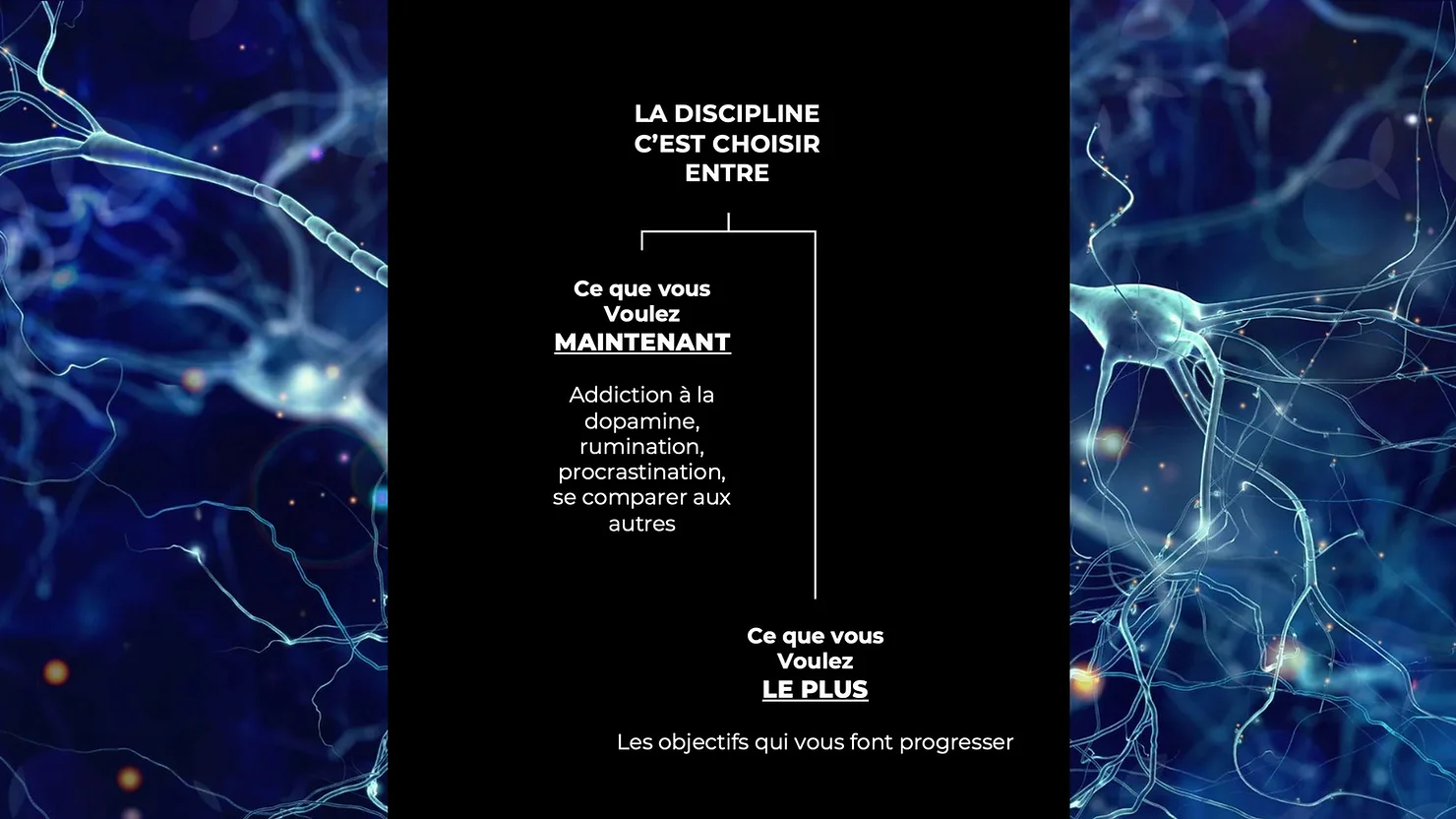
- Install habits that sustain performance, body and mind: neurohacking helps identify and rewire negative thought patterns, and build routines that sustain performance over time. A habit starts with discipline.
A ritual to start the day and prime yourself for performance
Before the first meeting, before the first decision: how you start the day sets your physiological state for the hours that follow. A simple, repeatable protocol:
- A glass of water on waking: the body needs hydration, and it is an easy habit to install.
- 10 minutes of physical activity: raise your heart rate and stretch the whole body. The body is the primary vehicle of action. These 10 minutes trigger a release of dopamine and serotonin while lowering waking cortisol.
- 10 minutes of meditation or 1 minute of cold shower: learn to observe objectively and to stop negotiating with your brain. This does not just work in theory: the anchoring is physiological.
- 5 to 10 minutes of journaling: structure the day and define what must come first today.
Optimizing your mind, brain, and body
The integral model of cognitive and emotional performance is built on four axes: Mind, Body, Relationships, and Environment. These axes derive from the pillars of epigenetics.
- Develop your MIND through practices that raise the quality of thought itself: meditation, gratitude exercises, writing, music, or — more rarely — neurolinguistic programming. Our perception of reality depends on our mindset. Controlling your mindset means controlling how you read reality — and therefore the quality of your trade-offs.
- Care for your BODY through physical practices that benefit the whole ecosystem: quality sleep, sound nutrition, daily physical exercise. The attention paid to the body lays the foundation for sustained energy, lasting health, and command of your emotions — three critical assets for anyone operating under a heavy mental load.
- Choose healthy RELATIONSHIPS: humans are social animals. Our behaviors are shaped by the people around us more than by any other factor. We act constantly to create resonance with those who surround us. The aphorism that we are “the average of the five people we spend the most time with” often proves true. Balance comes from choices, sometimes hard ones: moving toxic people out and moving closer to those who pull you upward — including in the composition of a leadership team.
- Protect your ENVIRONMENT: the environment cuts across every facet of daily experience — the work of body, mind, and social relationships. But it also includes the quality of the air you breathe, your sleeping conditions, the lighting of the places you live in, the care given to the aesthetics around you, and the ability to change scenery and regularly rekindle your curiosity. Protecting your environment also means staying aware of the living world around us, of the sacredness of Life and of the planet where all of this unfolds.